A chatbot that makes filing taxes less scary
A friendly AI chatbot that helps you explore tax-saving strategies before tax season.

Plan smarter, not just file
Personalized deduction guidance

Duration
2 weeks
Tools used
Figma, ChatGPT, Zoom
Team members
2
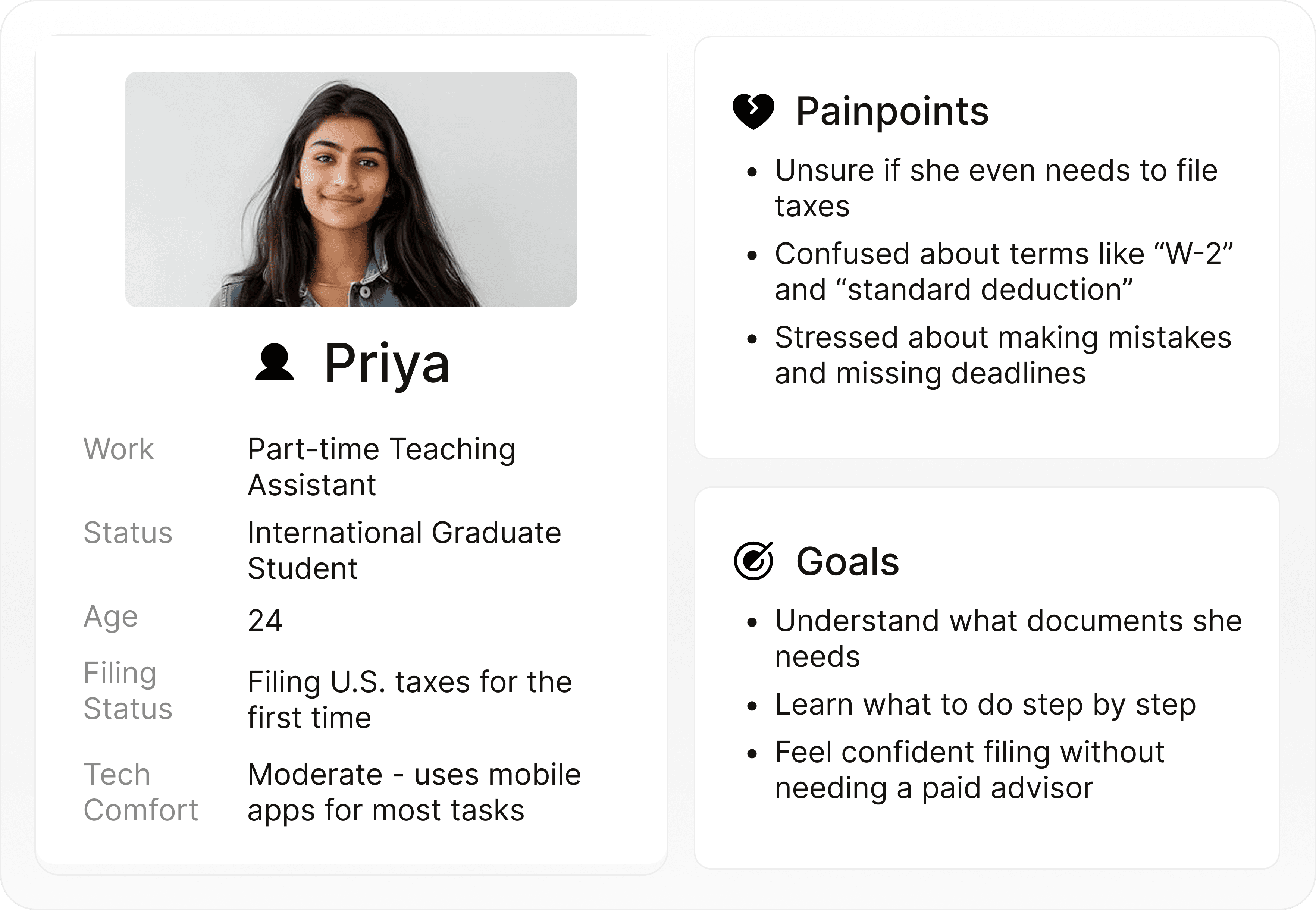
Students, facing complex first-time tax scenarios without financial literacy, lack an accessible and supportive resource to overcome confusing IRS language and confidently navigate filing requirements.

Lack of guidance
Most students are filing taxes on their own for the first time with no prior financial literacy. They don’t know where to begin or what’s required leading to missed deadlines or stress.
Unexpected complexity
Common student situations like campus jobs, scholarships, and income from multiple states can add unexpected complexity to what seems like a "basic" tax case.
Confusing language & forms
Official IRS forms and the language used are not beginner-friendly, making the entire process feel intimidating and confusing.
User Interviews
3
graduate students
We conducted informal, moderated testing sessions with students who were all first-time U.S. tax filers.
The group included both domestic and international students to capture diverse perspectives.
Conducted one-on-one semi-structured interviews.
Used a "think-aloud" protocol to capture their thoughts, reactions, and points of confusion in real-time.
Focused on assessing the clarity of the language, the overall conversational flow, and the user's emotional response (e.g., stress, confidence).
Literature & Market Review
5
existing platforms
We started by analyzing existing information to understand the common challenges of tax filing.
Sourced from: IRS.gov (taxpayer guides), Reddit threads (r/personalfinance, r/tax), Online forums & review sites for TurboTax, H&R Block, etc. Financial blogs & U.S. tax planning articles
Analyzed how existing tax software is structured for filing versus planning.
Looked for gaps in the market, particularly for tools aimed at pre-filing guidance and education.



Empathy is essential
For a confusing topic like taxes, a supportive tone was more important than just getting answers quickly.

Context matters
Generic tax advice wasn't enough; users needed answers tailored to their specific situation.

Jargon is a barrier
The design needed to prioritize simple, plain-language explanations to make information accessible.

Guided conversations
Pre-set prompts and a clear, step-by-step chat flow helped them start and continue the conversation confidently.


Visuals clarify
Even in a chat interface, simple visuals (like a W-2) help users understand complex information much better.

“Do I need to file taxes?”
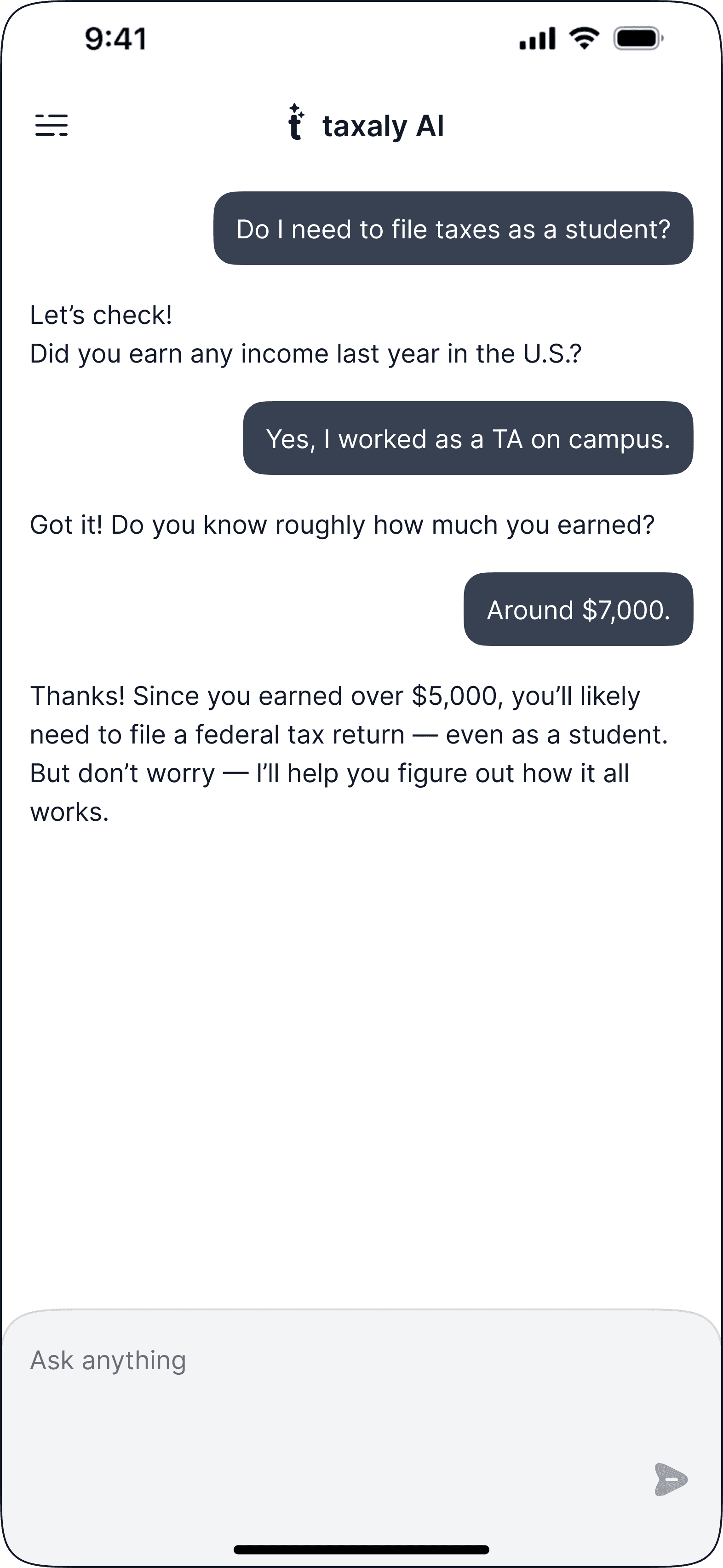
Bot walks through eligibility with simple yes/no prompts.
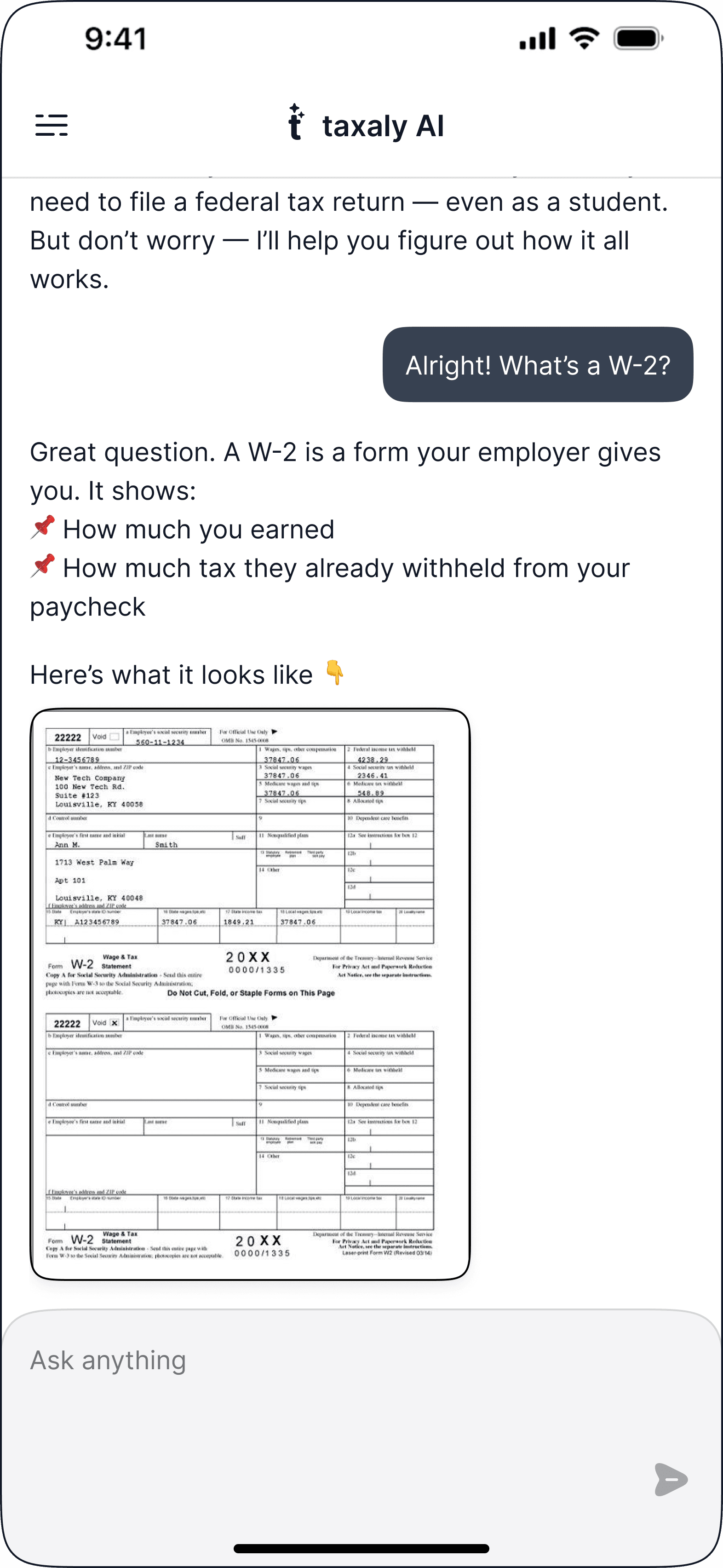
“What is a W-2”
Visual aid + 2-line plain English definition.
“What if I worked in two states?”
Taxaly surfaces key considerations & next steps.
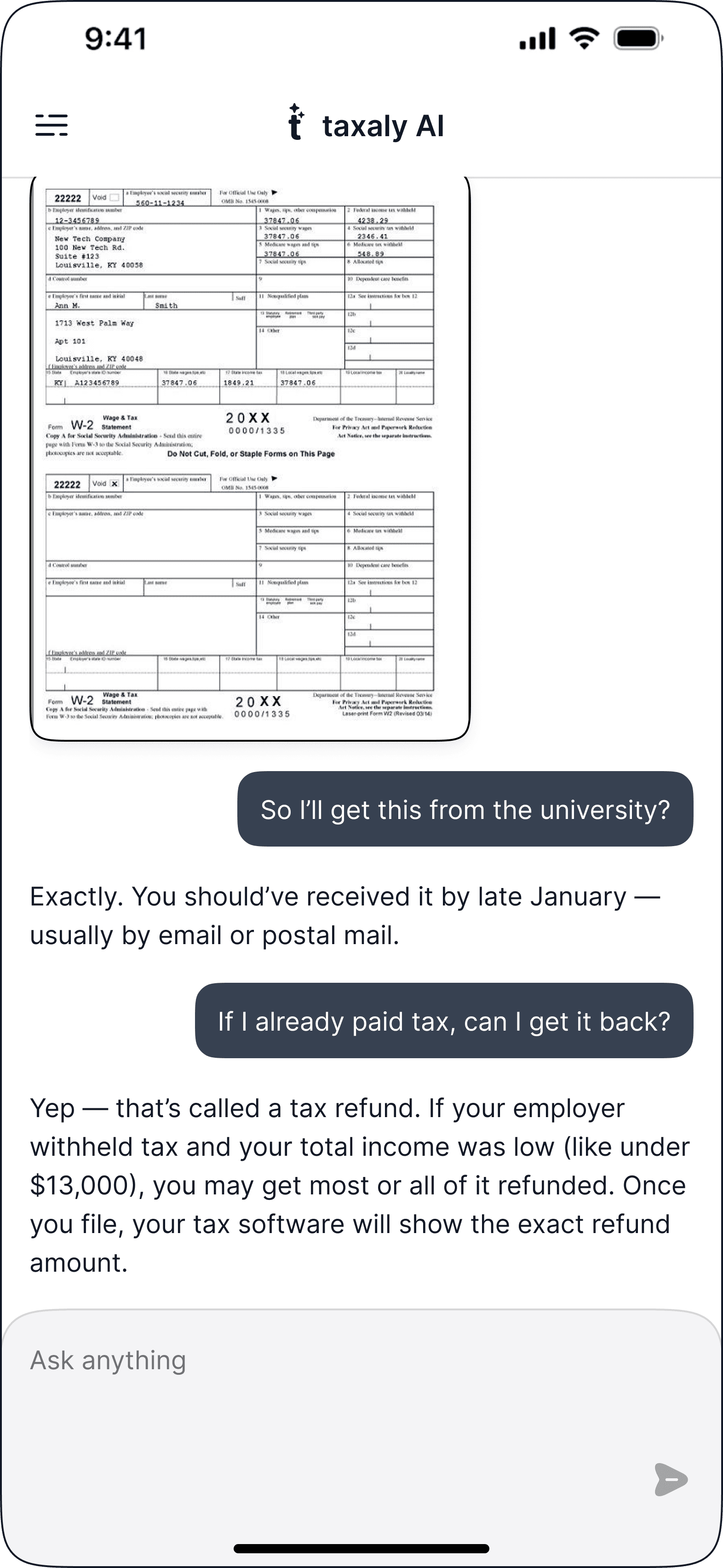
“How do I know if I’m getting a refund?”
Bot walks through refund estimator based on basic inputs.
Conversational Guidance
We built a chatbot to help students navigate tax filing through interactive dialogue, moving beyond static forms or simple FAQs.
Key Student Scenarios
The prototype focused on common student tax situations, such as understanding W-2 forms, standard deductions, and income from on-campus jobs.
Confidence-Building Design
It was designed to answer key questions, guide basic decisions, and ultimately build user confidence, all within a low-to-mid fidelity, mobile-first Figma prototype.

Conversational design approach
Bot Persona: The Helpful Peer
We intentionally designed Taxaly's personality to be "friendly, supportive, and non-judgmental". The goal was to create an assistant that felt like a knowledgeable friend who has "been there" before, one who speaks in "plain English, not IRS jargon".
Interaction Style: Conversation-Centric
We adopted a "Conversation-Centric" style, focusing on natural, back-and-forth dialogue rather than having users fill out complex forms. This makes the experience more approachable and less intimidating, especially for anxious first-time filers.
Dialogue Structure
The conversational flow was carefully structured using several techniques:
Simple Prompts: The chat relies on simple Q&A exchanges and follow-up prompts to guide the user naturally through each step.
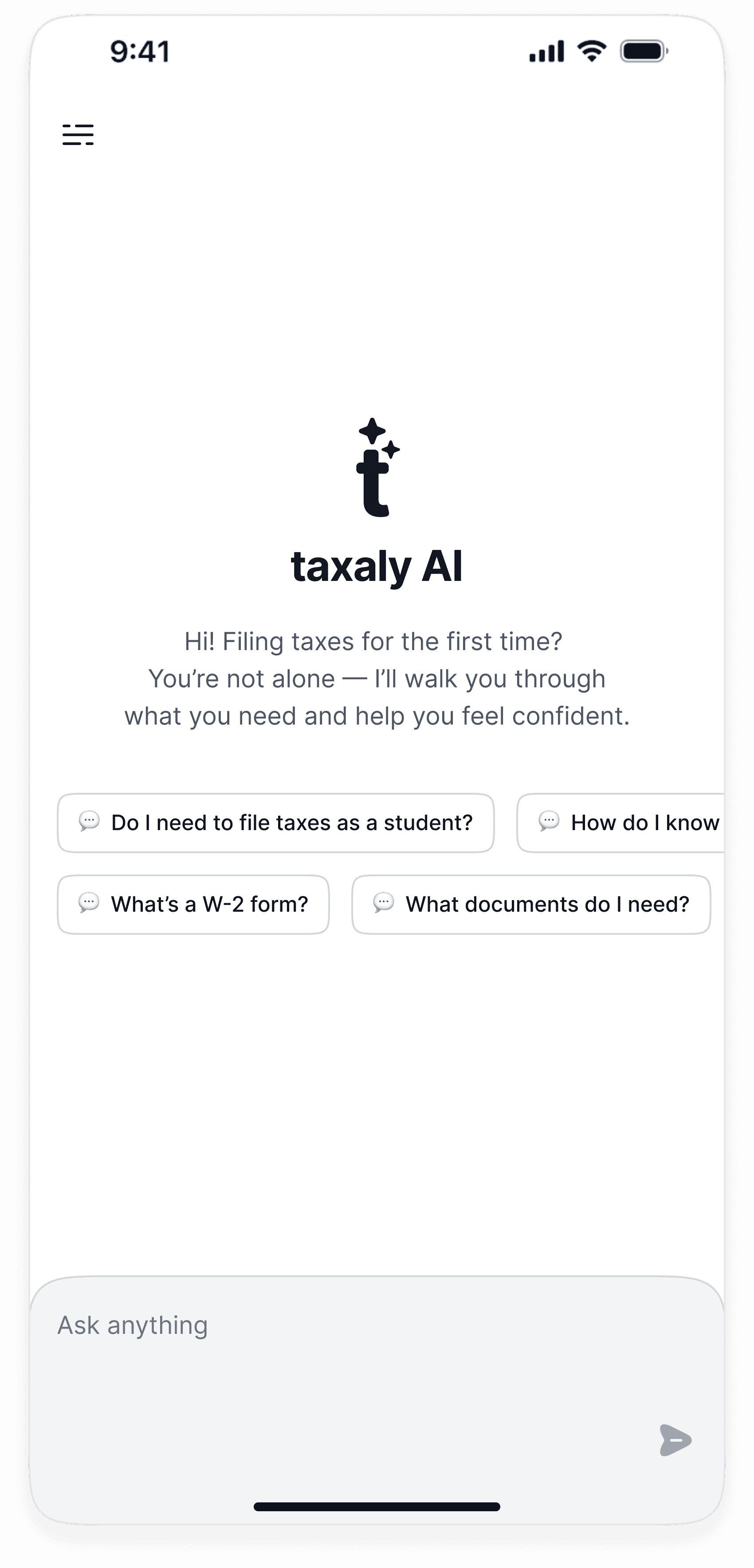
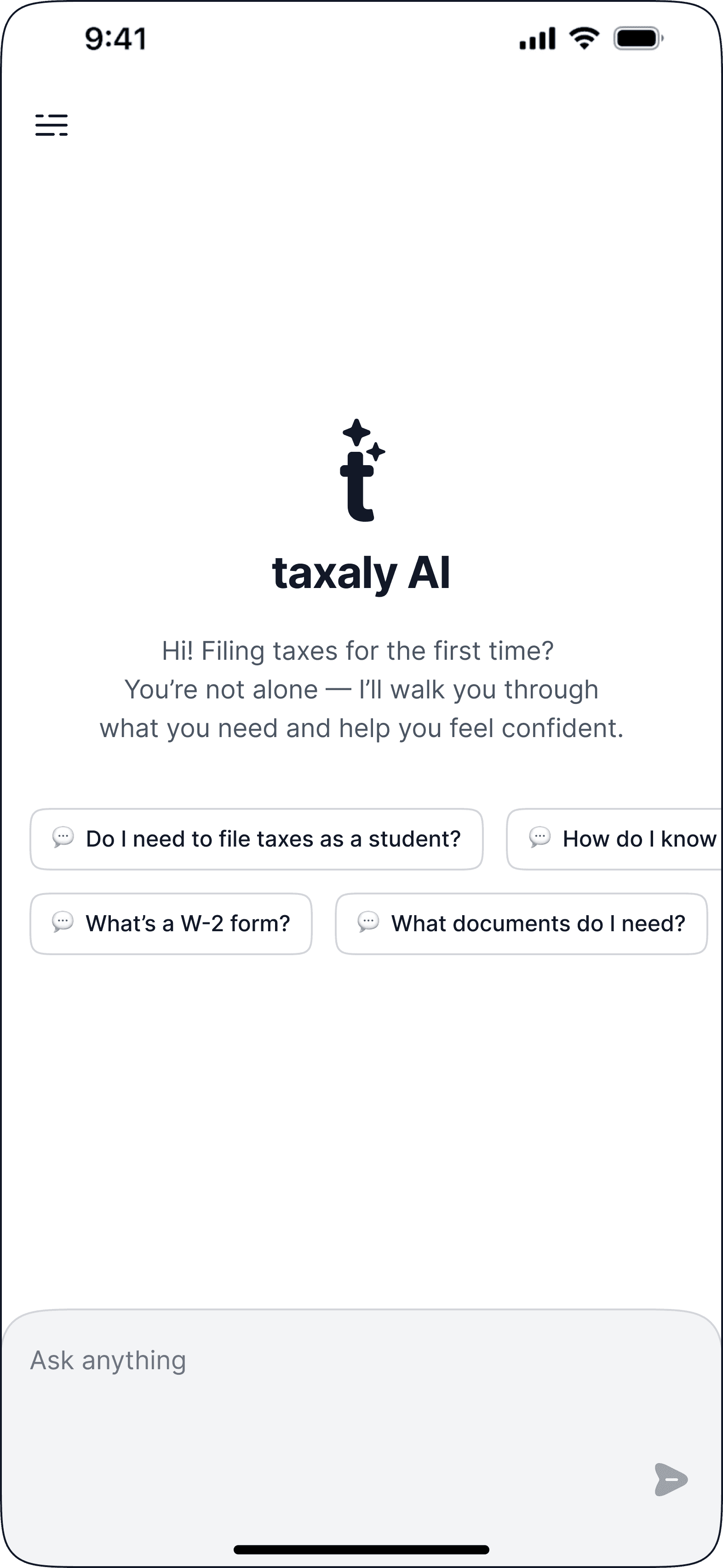
Pre-set Queries: To help users get started, the interface offers suggested questions (e.g., "What's a W-2 form?") to reduce decision fatigue and improve discoverability.
Visual Support: We integrated light visual elements, like form previews, to support understanding without disrupting the conversational flow
Iteration
Kicking off the chat
Taxaly greets users in a friendly tone with simple starting prompts.
Iteration
Understanding Key Tax Concepts
• Taxaly breaks down W-2 forms using plain language and light visuals.
• Explains refund eligibility based on income and withholding — core student concern.
• Keeps the tone helpful and non-judgmental to encourage curiosity.
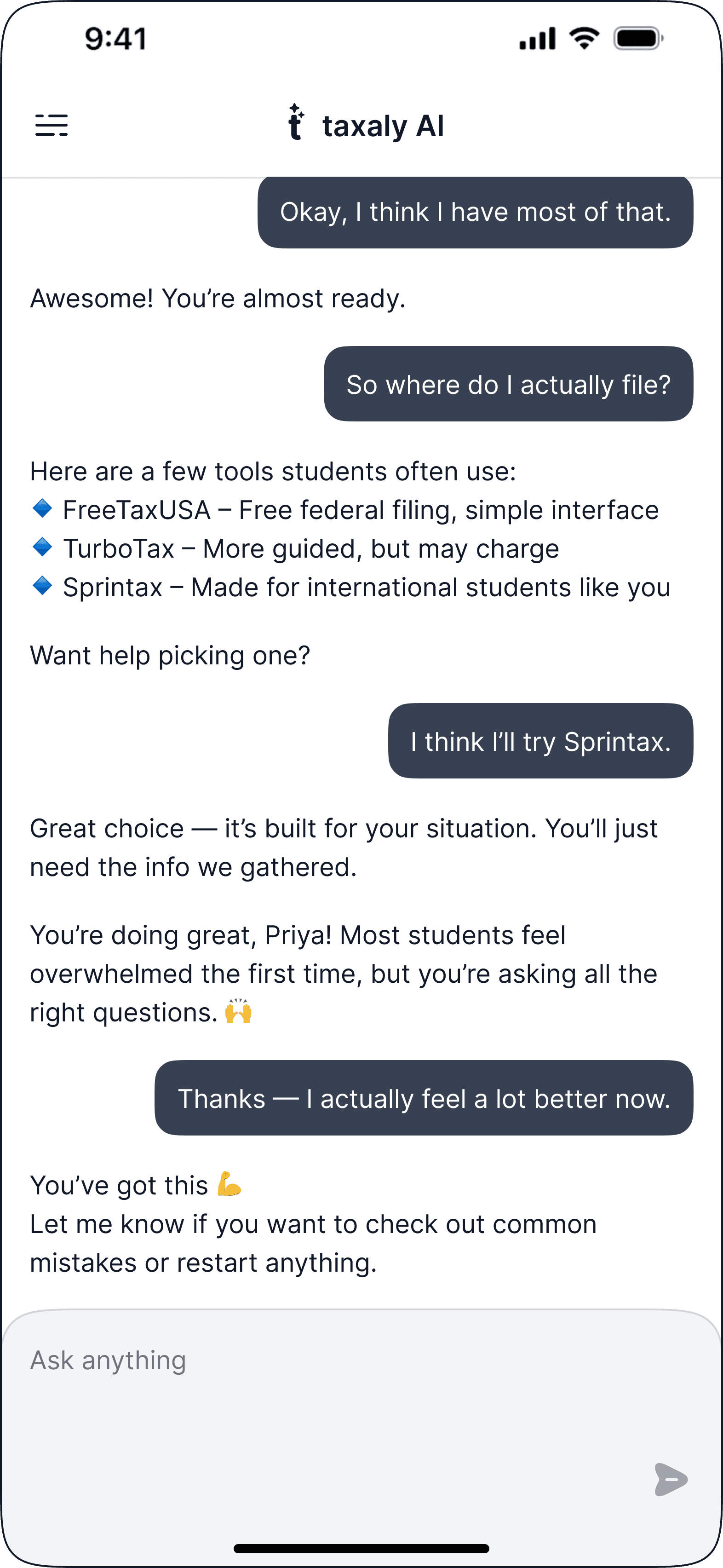
Iteration
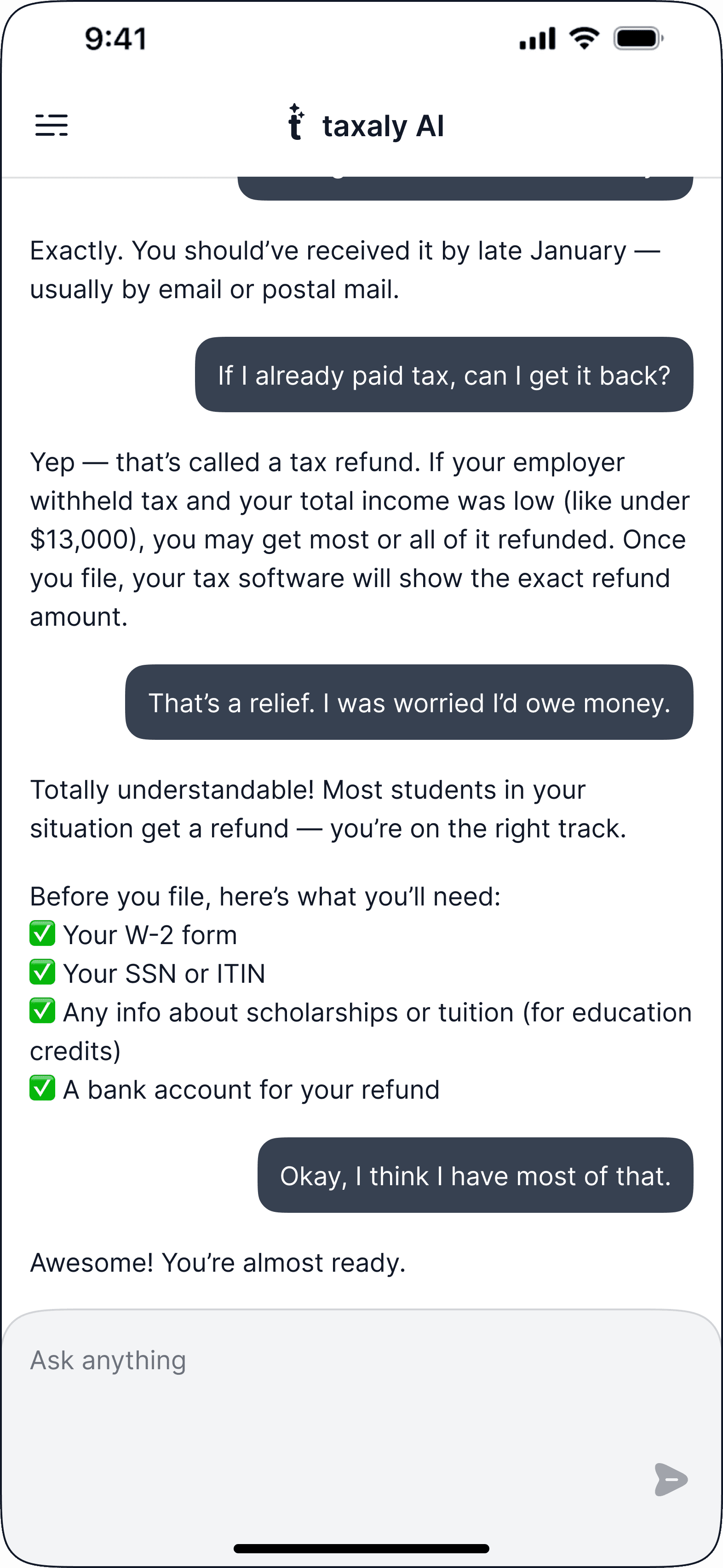
From Confusion to Clarity
• Provides a simple checklist of required documents.
• Suggests filing platforms relevant to student situations (e.g., Sprintax for internationals).
• Ends with emotional reassurance to boost confidence before filing.
• Conducted informal pilot testing with 3 graduate students who recently filed U.S. taxes for the first time.
• Observed reactions, confusions, and overall flow to assess clarity, usability, and tone.
• Can first-time student filers understand the flow without guidance?
• Does the chatbot explain tax terms (e.g., W-2, refund) clearly?
• Do users feel supported and less anxious after using the tool?
10%
10%
Anxiety reduction
10%
10%
Task completion rate
10%
10%
Confidence in next steps
Prioritize Empathy in Sensitive Domains: Designing for a stressful topic like taxes taught me that a supportive and empathetic tone is paramount. Users value feeling understood and reassured more than ultra-fast responses. Future designs in sensitive areas will prioritize emotional support alongside functionality.
Guidance is a Feature, Not Just a Flow: Many users don't know what questions to ask or where to start. Providing proactive guidance through suggested prompts and structured conversations is crucial, especially for novice users. This transformed "what to say" into a key design element.
The Power of Clear Expectations: Initial confusion around Taxaly's purpose (guide vs. filer) highlighted the importance of setting clear user expectations upfront. Explicitly defining a product's scope prevents frustration and improves the overall user experience.
Blend Conversational with Visual: While conversational UI is engaging, simple visual aids (like form previews) significantly enhance understanding and reduce cognitive load for complex information. Effective design often involves strategically combining interaction modalities.
Iterate with Diverse Perspectives: Testing with a diverse group, including international students, revealed specific needs that wouldn't have emerged otherwise. This reinforced the value of inclusive research to create truly tailored and effective solutions.